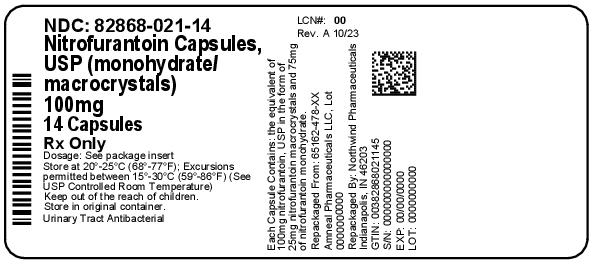
Macrocrystals
What is Nitrofurantoin (Macrocrystals)?
A urinary tract infection (UTI) is an incredibly common and disruptive experience. The sudden onset of a persistent urge to urinate, a burning sensation and pelvic discomfort can derail your day and leave you feeling miserable. When you’re dealing with a UTI, you want a treatment that is targeted, effective and works quickly. For decades, a first-line defense trusted by doctors to treat these infections has been the antibiotic Nitrofurantoin, specifically in its macrocrystal formulation.
Nitrofurantoin (Macrocrystals) is a prescription antibiotic specifically used to treat and prevent bladder infections. It belongs to a class of drugs called nitrofuran antibiotics. What makes the “macrocrystal” form special is its design. The larger crystal size of the medication allows it to be absorbed more slowly, which not only helps it reach its target in the urinary tract effectively but also makes it better tolerated, reducing the risk of stomach upset.
What does Macrocrystals do?
Nitrofurantoin (Macrocrystals) is primarily used for the treatment and prevention of uncomplicated urinary tract infections, specifically bladder infections (cystitis). It is highly effective against Escherichia coli (E. coli), the bacterium responsible for the vast majority of UTIs.
The main goal of treatment is to eliminate the bacterial infection from the bladder. Patients taking this medication can expect a significant reduction in their UTI symptoms such as pain or burning during urination, urinary frequency and urgency, often within the first couple of days of starting the course. It is crucial to complete the entire prescribed course of the antibiotic, even if you start feeling better, to ensure the infection is completely cleared and to prevent it from recurring.
How does Macrocrystals work?
Nitrofurantoin has a unique and targeted mechanism of action. After you take a capsule, it is absorbed from your digestive system into your bloodstream and then rapidly filtered by your kidneys into the urine. This is a key feature, the medication doesn’t build up to high levels in the rest of your body, but it becomes highly concentrated in your urine, right where the infection is located.
Once in the urine, the bacteria that are causing the infection to absorb the nitrofurantoin. Inside the bacteria, enzymes convert the medication into highly reactive, toxic substances. These substances then attack the bacteria from multiple angles at once, damaging their DNA, ribosomes (their protein-making machinery), and other essential components. This multi-pronged attack effectively stops the bacteria from multiplying and kills them off.
The “macrocrystals” are a pharmaceutical design that improves drug tolerability. The larger crystal size slows dissolution in the stomach, preventing nausea and stomach upset common with older, microcrystalline formulations, while maintaining effective antibiotic concentrations in the bladder.
Macrocrystals side effects
While generally safe for short-term use, Nitrofurantoin (Macrocrystals) can cause side effects. It is important to take this medication with food or milk to minimize some of the common issues.
Common side effects may include:
- Nausea, vomiting or loss of appetite
- Headache
- Dizziness
- Harmless dark yellow or brown discoloration of the urine
Serious side effects are rare, especially with short-term use, but need medical attention. These include:
- Pulmonary (Lung) Reactions: Rarely, acute lung reactions (fever, chills, cough, chest pain, shortness of breath) can occur. Long-term use has a very small risk of chronic lung problems like pulmonary fibrosis.
- Hepatotoxicity (Liver Damage): Liver problems are rare.
- Peripheral Neuropathy: Nerve damage (numbness, tingling, burning pain, usually in hands and feet) is more likely with kidney disease or diabetes.
- Hemolytic Anemia: A rare condition where red blood cells are destroyed too quickly, mainly in those with G6PD deficiency.
Avoid this medication if you have severe kidney issues, are pregnant (38-42 weeks), or for infants under one month. Seek immediate medical attention for severe cough, trouble breathing, severe numbness/tingling or allergic reactions (rash, hives, facial/throat swelling).
Macrocrystals dosage
Nitrofurantoin (Macrocrystals) comes as an oral capsule. To improve absorption and reduce the risk of stomach upset, it is essential to take it with a full glass of water and with food or milk.
For treating an active UTI, it is typically taken several times a day for about 5 to 7 days. For preventing recurrent UTIs, a lower dose is usually taken once a day at bedtime.
Routine lab monitoring isn’t needed for most short-course UTI patients. However, those on long-term preventive therapy may require periodic blood tests to monitor lung, liver, and kidney function for continued medication safety.
Does Macrocrystals have a generic version?
Yes, Nitrofurantoin (Macrocrystals) is widely available as a generic medication. The most common brand name for this specific formulation is Macrodantin.
It is important not to confuse it with another popular formulation, Nitrofurantoin monohydrate/macrocrystals, which is sold under the brand name Macrobid. While both are slow-release forms, Macrobid is designed to be taken twice a day, whereas Macrodantin (the pure macrocrystal form) is often dosed four times a day for active infections. Both are available as generics.
Conclusion
Nitrofurantoin (Macrocrystals) is a highly effective and reliable antibiotic that has been a go-to treatment for bladder infections for many years. Its ability to concentrate in the urine allows it to target the infection directly, while the macrocrystal formulation helps to make it a better-tolerated option.
While it is important to be aware of the potential side effects, especially with long-term use, the medication is considered safe and effective for most people when prescribed and monitored by a qualified healthcare provider. By taking it as directed and completing the full course, you can effectively clear your UTI and take a confident step toward feeling better.
References
- Mayo Clinic. (2024). Nitrofurantoin (Oral Route). Retrieved from https://www.mayoclinic.org/drugs-supplements/nitrofurantoin-oral-route/symptoms/drg-20065025
- National Institutes of Health. (2018). Nitrofurantoin. MedlinePlus. Retrieved from https://medlineplus.gov/druginfo/meds/a682252.html
- U.S. Food and Drug Administration (FDA). (2009). MACRODANTIN (nitrofurantoin macrocrystals) Label. Retrieved from https://www.accessdata.fda.gov/drugsatfda_docs/label/2009/016620s075,018244s031,020261s022lbl.pdf
Approved To Treat
Top Global Experts


Related Clinical Trials
Summary: This open-label, parallel-group randomized controlled trial compares two prophylaxis strategies for recurrent urinary tract infection (rUTI) in postmenopausal women: (1) nightly oral nitrofurantoin 100 mg for 6 months versus (2) a vaginal tablet containing Lactobacillus with ultra-low-dose estriol (Gynoflor: nightly for 14 days, then twice weekly to month 6). Participants (≥40 years) are randomize...
Summary: Single-site prospective observational pilot feasibility study of women with overactive bladder/urge urinary incontinence undergoing onabotulinum toxin type A intradetrusor injections in order to achieve the following objectives: * Establish a record of successful collaboration with Dr. Ravel, an expert researcher in the female microbiome based at the University of Maryland * Demonstrate the invest...
Summary: Feasibility assessment of intravesical gentamicin instillation (putting antibiotics directly into the bladder) versus the current standard of care of oral nitrofurantoin prophylaxis (taking a low dose of antibiotics by mouth every day) to prevent recurrent urinary tract infections (UTI)
Related Latest Advances
Brand Information